A New Museum Chronicles America’s Uneven Experiment in Public Housing
By: Zach Stevenson
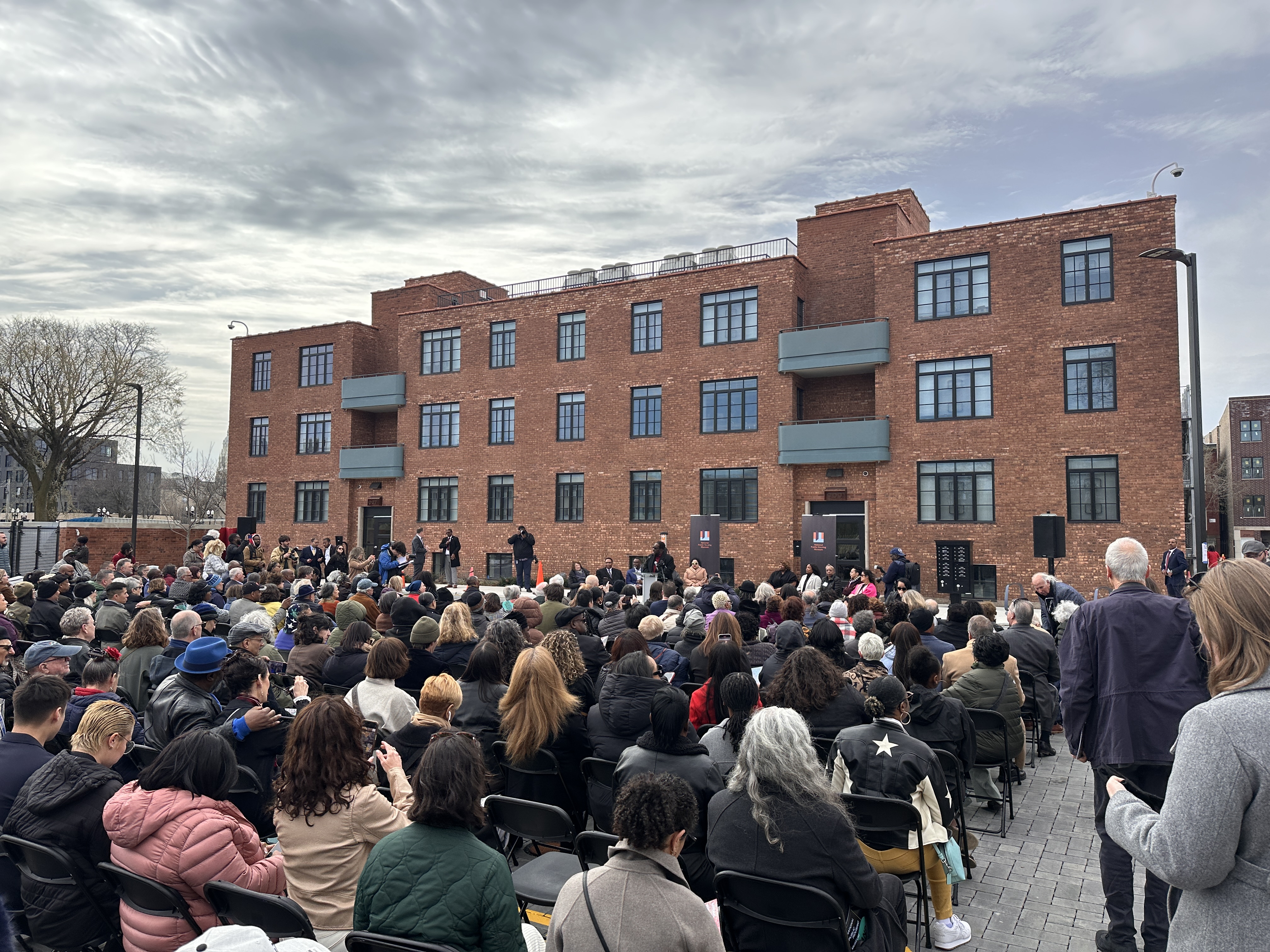
A few months ago, I told a septuagenarian friend of mine that I was excited to visit the National Public Housing Museum; he responded with incredulity, wondering why anyone would want to commemorate something that, to his understanding, was shorthand for criminality, filth, and abject poverty. Why build a monument to a policy failure?
The National Public Housing Museum (NPHM), which opened in April 2025 in the last
remaining building of the Jane Addams Homes, located on Chicago’s Near West Side, answers this question in two ways.
First, the museum wisely and humanely centers the experiences of public housing residents, finding that for all of their flaws, public housing projects like the Jane Addams and Cabrini-Green Homes were, first and foremost, places where real people lived, grew up, grew old, raised children, and felt joy and despair. The “History Lessons” exhibit, which features household objects on loan from former and current public housing residents living in Chicago, Houston, and New York City, does an especially good job of foregrounding the human stories of public housing.
One such story is that of current Supreme Court Justice Sonia Sotomayor, who contributed her high school graduation photos to the exhibit. Sotomayor, who grew up in the Bronxdale Houses in Bronx, New York, writes that her mother saw Bronxdale “as a safer, cleaner, brighter alternative” to the tenements. The exhibit also contains a commemorative album that the lead singer of REO Speedwagon, Kevin Cronin, gave to LaTonya Floyd after her brother George was killed in 2020. Growing up in the Cuney Homes in Houston, Texas, George and LaTonya would listen to REO Speedwagon’s “Keep on Loving You.” “We sang it almost every day,” says LaTonya, “and we sang it a week before he got killed.”
A second way that the NPHM places public housing residents at the center of its story is through the historic apartment tour. Beginning in the 1930s and continuing through the 1970s, the tour follows the arc of twentieth-century public housing, by way of two families. It begins with an exploration of the recreated apartment of the Turovitzes, a Jewish family who moved into the Jane Addams Homes in 1938 and stayed for four years, and concludes with a visit with the Hatches, a Black family who lived in Jane Addams between 1962 and 1974. Both apartments are recreated with specificity and care, and both help to situate the museum visitor within a particular historical and cultural moment. The Turovitz apartment includes a hand crank meat grinder for making chopped liver, while one of the bedrooms in the Hatch apartment features the records of Aretha Franklin.
But the historic apartment tour does more than share the stories of two families who lived in public housing; it also offers a second answer to the question posed by my septuagenarian friend. Namely, that a public housing museum is necessary so that we can come to terms with what went wrong. The second leg of the tour, which is sandwiched between the two apartment visits, is a seven-minute-long film that explains how the promise of comfortable and affordable housing for all was undermined by racially restrictive covenants, anti-Black violence, redlining, and policies
that ensured that only the poorest of the poor were permitted to live in public housing.
Ultimately, inspiring symbols of social democracy became prisons for poor people of color. Or, as the film’s narrator, Keeanga-Yamahtta Taylor, puts it, “for too many people, the American dream has become an American nightmare.”
Commendably, the NPHM pairs its historical focus with a commitment to advocacy. For
instance, the museum’s “Demand the Impossible” room includes a temporary installation on the Plan for Transformation, the Chicago Housing Authority’s early-twenty-first century effort to modernize its public housing stock. The installation, which is curated by UIC professor David Stovall, notes that though the Plan sought to “deliberately disrupt entrenched patterns of segregation and concentrated poverty,” it ended up eliminating far more affordable housing than it created. A quarter of a century later, the Plan for Transformation looks more like a halfhearted cosmetic fix than a sincere effort to make Chicago’s public housing stock newer, safer, and more conducive to flourishing.
In sum, the National Public Housing Museum is an impressive and provocative space, one that ably narrates a key plot point of twentieth-century urban history while also pushing visitors to imagine what housing justice might look like in the twenty-first century.
 The Lakefront Historian
Leave a comment